
Every journey with a dog in the car starts with one question: are they secure? In the UK, the Highway Code gives a clear answer, and getting it right protects your dog, your passengers and you.
What Rule 57 says
Rule 57 of the Highway Code asks drivers to make sure dogs and other animals are suitably restrained, so they cannot distract the driver or be injured, or injure anyone else, if the car stops suddenly. It lists a seat belt harness, a pet carrier, a dog cage or a dog guard as suitable options.
An unrestrained dog moving around the cabin is a distraction, and insurers may look closely at a claim where an animal was loose in the car. Check your own policy wording.
Using a seat belt tether
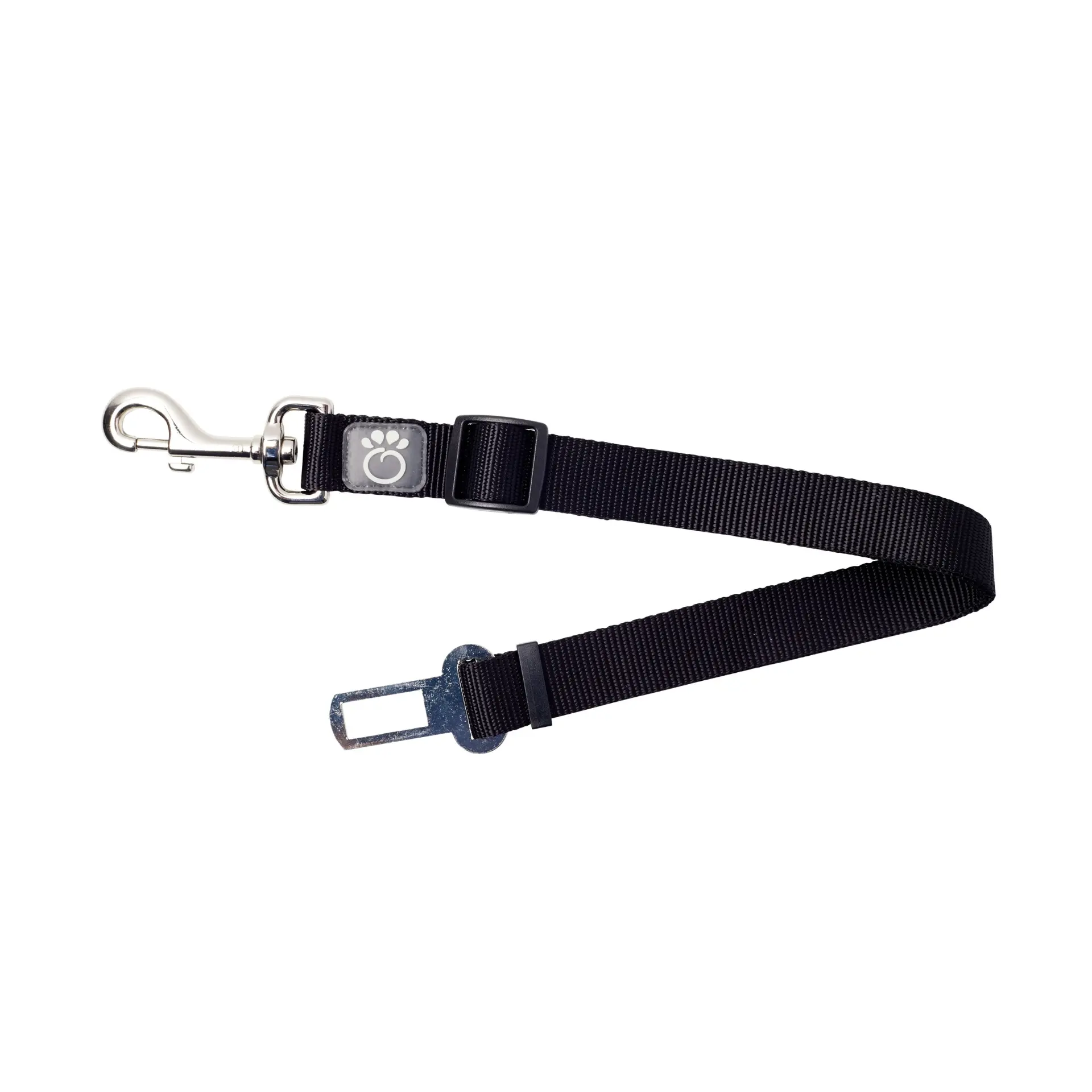
A seat belt tether connects your dog’s harness to the car’s seat belt buckle or belt. Keep these points in mind:
- Always clip it to a well-fitted harness, never to a collar
- Adjust the length so your dog can sit and lie down but cannot reach the front seats
- Use the rear seat, away from front airbags
- Check the clip and stitching regularly for wear
Smaller dogs and cats
For small dogs and cats, a secure carrier is often the easiest option. Place it on the rear seat or footwell and fasten it with the seat belt where the carrier allows, so it cannot slide.
On longer journeys
Plan a break every couple of hours for water, a short walk and a toilet stop. Never leave a dog alone in a parked car on a warm day; temperatures inside rise quickly, even with windows open.
Ready for the road: the Pet Seat Belt Tether clips to your dog’s harness and the car’s seat belt. For smaller pets, browse our backpack carriers.